
The first time I tried to design a room from scratch, I did what most people do. I opened Pinterest, saved everything that looked good, and ended up with a folder of 200 images that had absolutely nothing in common.
Rattan chairs next to mirrored Art Deco sideboards. Whitewashed Scandinavian walls beside Moroccan tile floors. A moody gothic bookshelf next to a light-filled Hamptons sofa.
They were all beautiful images. As a room, it would have been a disaster.
The problem was not taste. The problem was that I had no framework. I was collecting aesthetics instead of choosing a style – and those are genuinely different things. An aesthetic is a visual moment you like.
A style is a coherent set of principles that tells every material, colour, form, and finish how to relate to everything else in the space.
Get the style right first, and the individual decisions become much easier. Get it wrong, and you can spend a significant amount on beautiful objects that never add to a beautiful room.
This is a complete guide to the major interior design styles worth knowing in 2026 – what defines each one, what it requires to work properly, and who it suits.
Why Identifying Your Interior Design Style Saves You Money
Before getting into the styles themselves, this point deserves its own section.
A 2024 survey by Houzz found that 52% of homeowners who completed a renovation reported purchasing furniture or decor they later regretted.
The most common reason cited was that items “did not fit the overall style” of the room. The average spend on those regretted purchases was approximately AED 8,815 per household.
That figure does not account for the time spent returning items, living with the wrong pieces, or eventually replacing them.
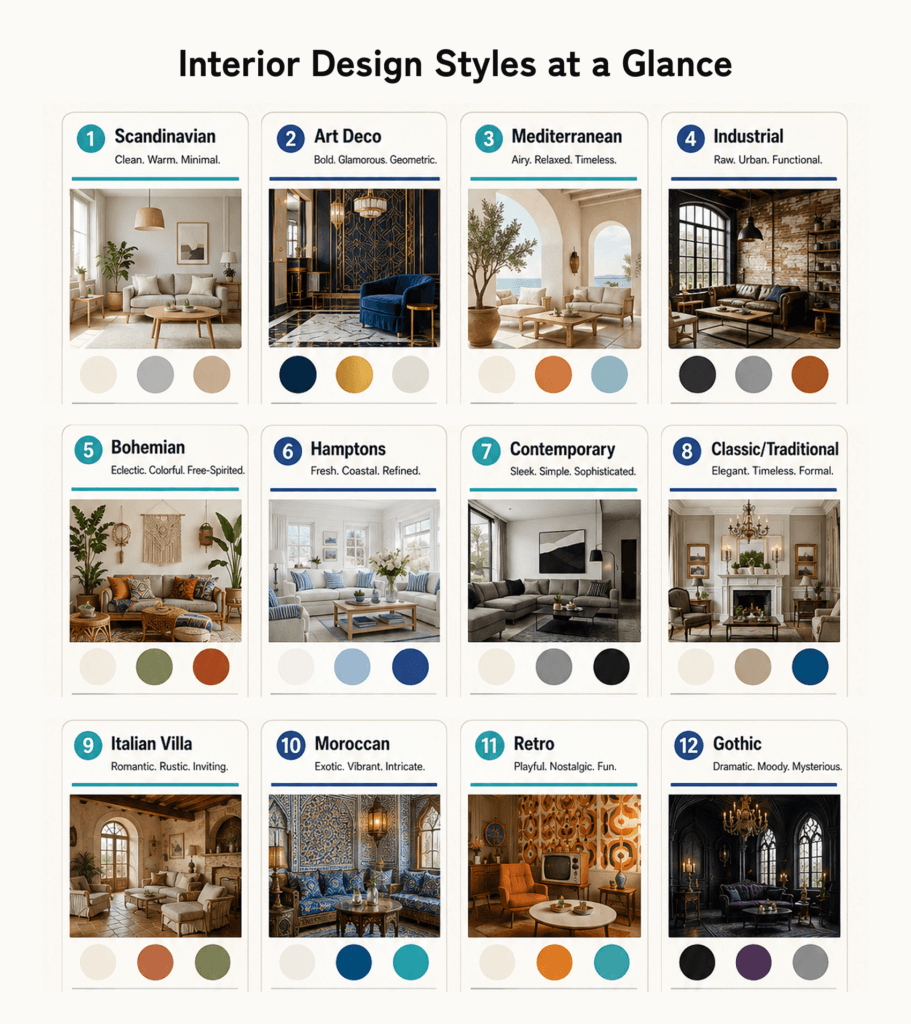
Style clarity is a decision-making filter. Once you know which interior design style you are working within, each new purchase either fits or it does not. The ambiguity goes away. With that said, here are the twelve major types of interior design styles that matter in 2026.
1. Scandinavian Interior Design Style
Scandinavian design solved a real problem. In Nordic countries, winters are long, natural light is limited, and the temptation to make interiors feel heavy and enclosed is constant.
The Scandinavian response was to do the opposite. They stripped everything back to what is genuinely needed, ensuring each remaining element felt warm and deeply considered. The result became the most widely imitated interior design style on earth.
In 2026 Elle Decor’s 2025 trend report noted a move away from cold, sparse Scandinavian minimalism toward warmer, layered interpretations incorporating travertine, rattan, and terracotta-toned linen alongside the traditional Nordic palette.
What defines it:
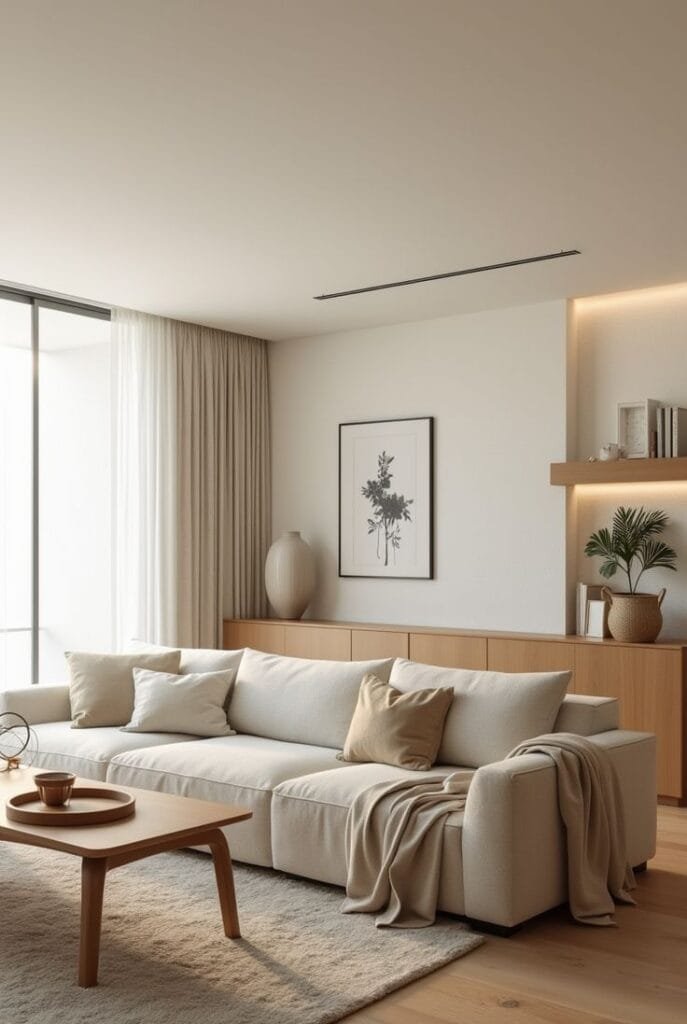
The palette runs from white and off-white through warm grey, soft oat, and muted sage or dusty blue as an accent.
Natural light is treated as a primary material – windows are kept unobstructed, and artificial lighting is carefully layered to compensate when daylight fades.
Furniture sits low with clean lines and no surface ornament. Timber, particularly oak, pine, and birch in lighter finishes, appears on floors, in furniture frames, and in small accessories.
Textiles carry the warmth that hard surfaces cannot. Key layers include chunky knit throws, undyed wool rugs, linen cushions, and softly draped curtains. Plants appear as a natural extension of the connection to the outdoors.
Where it performs well: Apartments and compact homes benefit most. The pale palette creates a strong sense of space, and the restrained approach prevents smaller rooms from feeling cluttered.
Where it falls short: In large villas or rooms with high ceilings, Scandinavian interiors can feel underscaled if the furniture is not proportioned correctly. The style also requires good natural light to feel genuinely warm rather than clinical.
2. Art Deco Style Interior Design
Art Deco arrived in the 1920s as a deliberate break from everything that came before it. Victorian interiors had been dark, heavy, and dense with floral ornament. Art Deco stripped that out and replaced it with bold geometry, rich materials, and a mood of deliberate glamour.
The Dubai Design Week 2024 trend briefing identified Art Deco revival as one of three dominant aesthetic directions in premium UAE residential projects for 2025–2026, alongside warm contemporary minimalism and Italian neoclassicism.
The style was built for specific cultural moments like post-war optimism, rising prosperity, and a genuine belief that the modern era was worth celebrating. That underlying mood is why the Art Deco style of interior design continues to translate well into contemporary luxury projects nearly a century later.
What defines it:
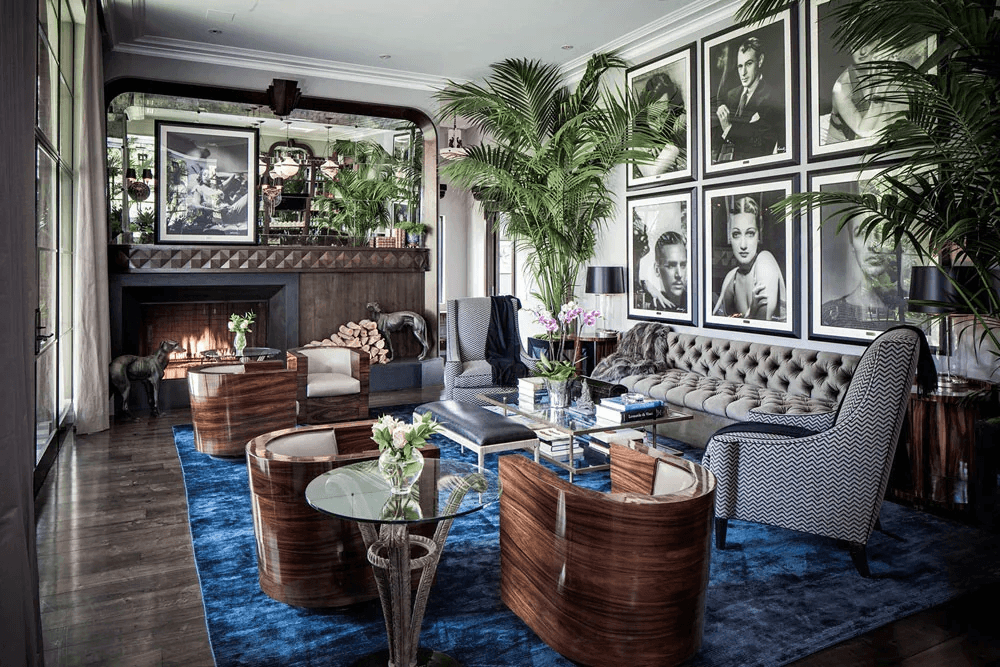
Geometric forms are the visual foundation. Chevron, fan, sunburst, stepped arch, and zigzag patterns appear in floor inlays, wall panels, furniture silhouettes, and metalwork.
The palette is rich: black and gold are the signature combination, but deep jade, navy, burgundy, and ivory work equally well when paired with the right geometric forms.
Materials include lacquered surfaces, mirrored glass, polished brass and chrome, velvet upholstery, and exotic timber veneers.
Lighting is a statement piece rather than a background element. Fan-shaped wall sconces, geometric pendant clusters, and backlit glass panels are all period-authentic and read as refined in contemporary settings.
Where it performs well: Larger rooms with architectural presence carry Art Deco geometry best. Entry halls, formal dining rooms, master suites, and hospitality settings – hotel lobbies, restaurant interiors, and private members’ clubs – are natural fits.
For Dubai villa projects specifically, the scale and material appetite of Art Deco aligns closely with the local luxury residential format.
Where it falls short: Small spaces struggle to carry the visual weight correctly. The style also demands material quality – Art Deco executed in low-grade substitutes looks theatrical rather than refined.
3. Mediterranean Interior Design Style
Mediterranean style draws from southern Spain, coastal Italy, Greece, and North Africa. These are interiors built for sun, warmth, and a culture of relaxed hospitality.
Every material choice reflects the climate: thick stone walls that stay cool, arched openings that move air, and terracotta tile that holds the warmth of the day without radiating heat indoors.
For UAE homeowners, the Mediterranean interior design style carries direct practical logic. The climate parallels are genuine – the same design instincts that produce cool, shade-rich interiors in Mallorca or the Amalfi Coast apply directly to villa living in Dubai or Abu Dhabi.
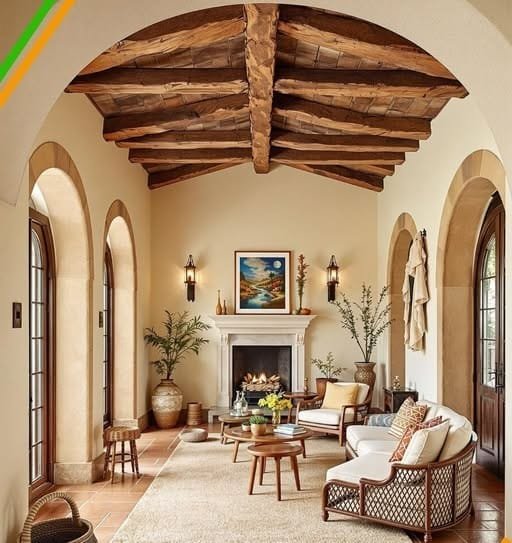
What defines it:
The palette draws from the landscape itself: terracotta, warm white, dusty olive, sun-bleached ochre, and blues from pale aquamarine to deep cobalt.
Floors are stone materials in large-format limestone, terracotta tile, or hand-painted ceramic – chosen partly for thermal mass, not only for appearance.
Arched doorways, textured plastered walls, and exposed timber ceiling beams are the architectural signatures.
Furniture is substantial without feeling heavy: solid timber frames, linen or woven cotton upholstery, and wrought iron in hardware and lighting.
The outdoor connection is central to the style’s function, not decorative – courtyards, covered terraces, and living spaces that open fully to the exterior are built into the floor plan’s logic.
Where it performs well: Villas and ground-floor properties with outdoor access. Spaces with high ceilings and generous natural light. Warm climate locations where the style’s thermal intelligence has a purpose.
Where it falls short: Apartments with no outdoor connection lose the Mediterranean style’s defining spatial logic. Stripped of the courtyard and terrace relationship, the remaining elements can feel like rustic decoration rather than a coherent design system.
4. Industrial-Style Interior Design
Industrial style has a specific origin story. In the 1990s, former factories and warehouses in cities like New York and London were being converted into residential lofts.
The architects working on these projects faced a choice: disguise the industrial bones of the buildings, or celebrate them. They celebrated them.
The exposed brick, raw concrete, visible steel beams, and ductwork that became the signature of industrial-style interior design were not design choices applied to a blank space. They were pre-existing conditions that someone decided to keep rather than cover.
What defines it:
Exposed brick, raw concrete, visible structural steel, and surface-mounted ductwork are the primary material signatures. The palette is tight and cool: charcoal, slate grey, rust, raw timber in darker stains, and matt black in fixtures and hardware.
Furniture choices lean towards utility: factory-style metal shelving, reclaimed timber tabletops, aged leather upholstery, and concrete-topped surfaces. Lighting follows the exposed aesthetic – Edison bulb pendants, cage-style fittings, and surface-mounted track lighting rather than recessed downlighters.
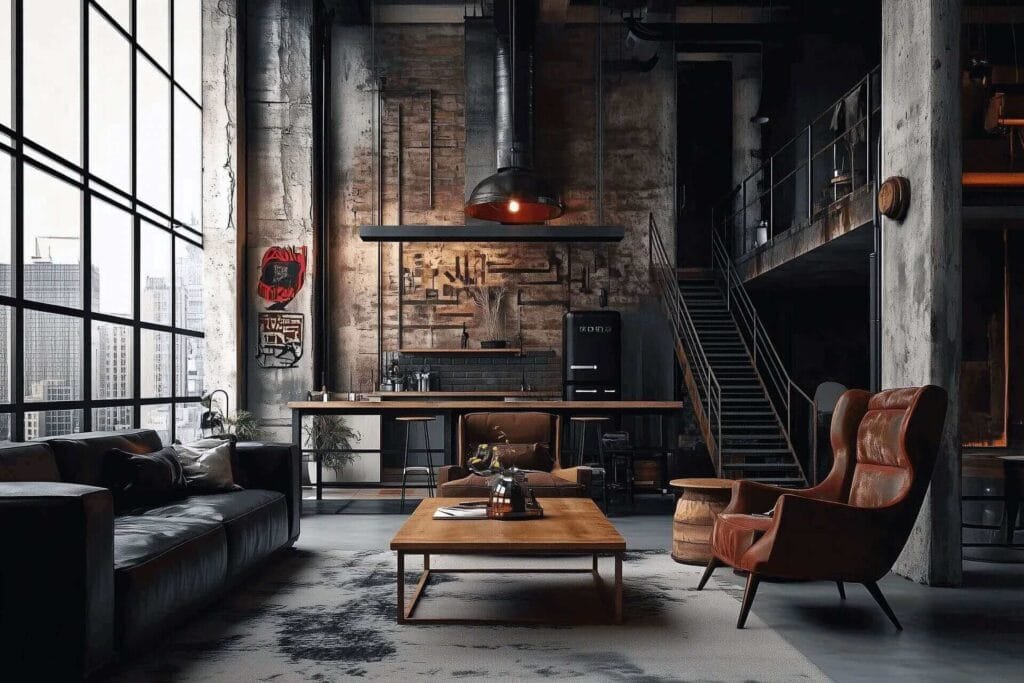
Where it performs well: Open-plan apartments, creative office fitouts, restaurant and bar interiors, and studio spaces. Projects where the existing architecture already has industrial characteristics – high ceilings, large windows, concrete or brick – carry the style with the least effort.
Where it falls short: Family homes with children often find the aesthetic too hard and cold over extended daily living. The style can also feel forced when applied to conventional domestic architecture with no industrial logic in the structure.
5. Bohemian-Style Interior Design
Bohemian is the most personal and the least prescriptive of the major interior design decorating styles. It does not operate on a fixed set of rules. It operates on an accumulation of objects, textiles, cultural references, time periods, and material types layered together over time.
The result, when it works, feels like a record of someone’s actual life and interests rather than a designed concept.
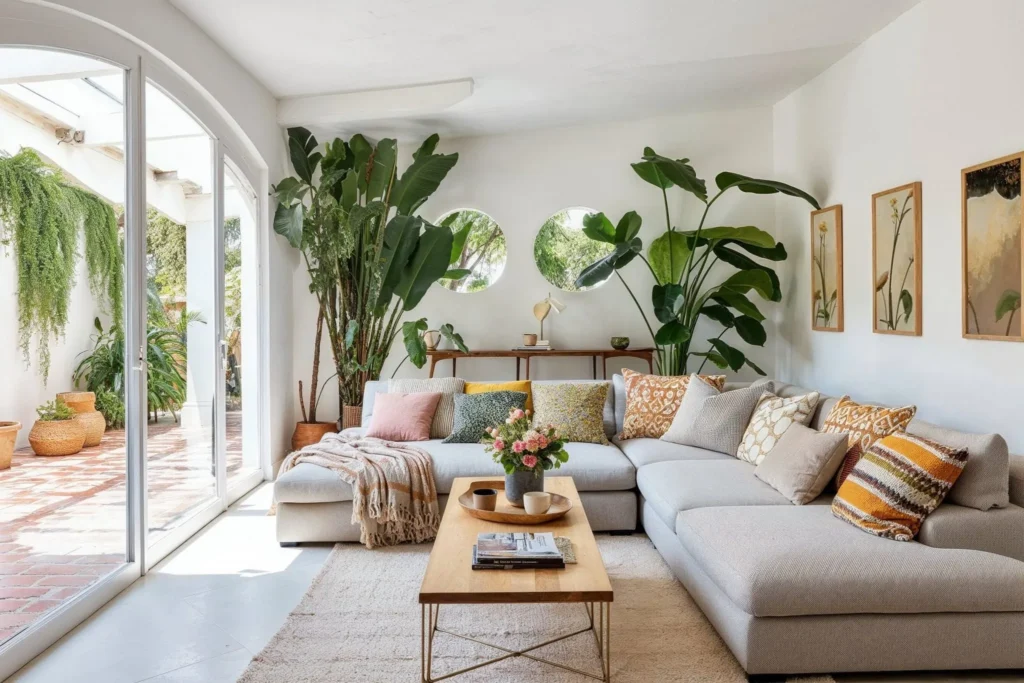
What defines it:
The palette is warm and saturated: terracotta, burnt amber, deep teal, mustard, faded rose, and burgundy frequently appear together. The key is that the saturation stays warm-toned throughout – that underlying warmth creates harmony across what would otherwise appear to be a chaotic mix of colours.
Textiles are the defining material category. Layered rugs on top of rugs, macramé and woven wall hangings, embroidered cushions, patterned throws, and printed cotton or silk curtains create the density that gives bohemian spaces their character. Plants are integral.
Collections of objects from different origins – ceramics, baskets, stacked books, candles, and vintage finds – build the layered atmosphere over time.
Where it performs well: Bedrooms, personal reading rooms, and creative studio spaces. Bohemian scales down more naturally than it scales up — the style has an editorial challenge at villa scale that requires a strong guiding eye to prevent it from tipping into visual chaos.
Where it falls short: Commercial settings, formal entertaining spaces, and people who find visual density genuinely stressful will find bohemian interiors difficult to maintain long-term.
6. Hamptons-Style Interior Design
The Hamptons is a specific place located in the beach communities of Long Island’s east end, historically used as summer retreats by wealthy New York families.
The interior style that developed in the Hamptons emerged from a very particular brief: relaxed enough for a beach house and refined enough for people who had no intention of actually being casual.
That productive tension is what makes Hamptons-style interior design so consistently useful as a reference for contemporary luxury residential projects.
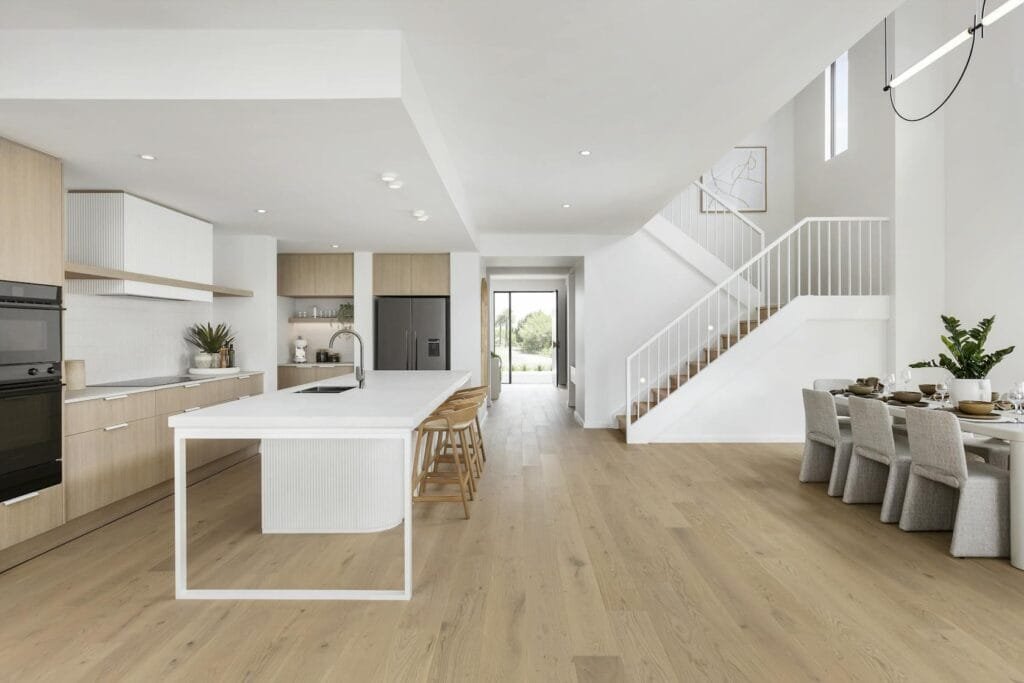
What defines it:
The palette is cool and clean: white, soft grey, pale blue-grey, and navy are the core range, with natural timber and wicker introducing warmth.
Ceilings are frequently panelled or coffered in white-painted timber. Shiplap wall cladding and board-and-batten detailing are signature architectural elements.
Furniture is oversized and comfortable – large upholstered sofas in white or pale linen, substantial timber dining tables, and generously scaled armchairs with loose covers.
Layered blues, from powder blue through to deep navy, tie the space back to the coastal context without creating a literal beach reference. The overall register is restrained, comfortable, and quietly expensive.
Where it performs well: Large residential properties where comfort and quiet refinement are both priorities. Properties with covered outdoor spaces – verandas, pool-adjacent terraces, or screened porches – suit the style’s indoor-outdoor logic well.
Where it falls short: In smaller apartments, the large-scale furniture and strong white palette can read as institutional if not managed carefully.
The style also requires architectural detailing (panelling, coffered ceilings, and detailed cornicing) to perform at its best, which raises the baseline fit-out cost.
7. Moroccan-Style Interior Design
Morocco sits at the intersection of Berber, Arab, Andalusian, and French colonial design traditions.
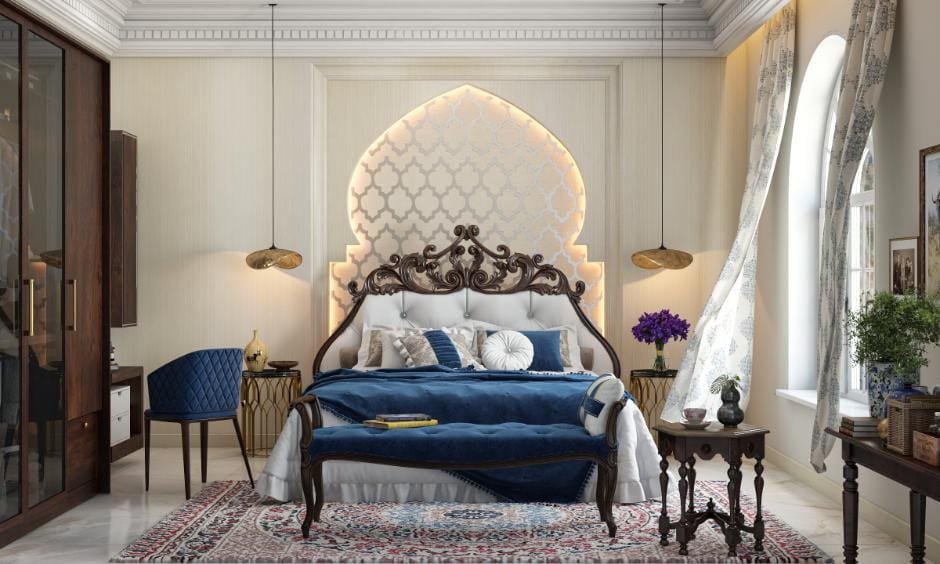
The interior style that emerged from this cultural layering is one of the most immediately recognisable in the world and one of the most technically demanding to execute well: geometric tilework, hand-carved plaster, latticed woodwork, and a palette of deep jewel tones set against warm natural stone.
What defines it:
The colour palette runs warm and deep: burnt orange, cobalt blue, emerald green, deep purple, and rich gold against terracotta and natural plaster backgrounds.
Pattern is the dominant design element: geometric zellige tiles on floors and feature walls; carved plaster screens and architectural reliefs; latticed wood panels (mashrabiya) in windows and partitions; and embroidered fabrics on cushions and hangings.
Lighting is atmospheric by design: pierced metalwork lanterns and pendant fittings cast patterned light across walls and ceilings throughout the day. Furniture is low-set, with upholstered banquette seating and leather pouffes as signature pieces.
Regional relevance for Dubai: Many of the architectural instincts in Moroccan design – the central courtyard, the use of carved plaster, the integration of geometric patterns across multiple surfaces – have direct parallels in Gulf architectural tradition.
This makes Moroccan-style interior design more culturally compatible with UAE residential projects than many Western styles and less dependent on expensive importation for authentic execution.
8. Italian Villa-Style Interior Design
This is the interior design style most closely aligned with the brief of Dubai’s premium residential market.
Italian villa-style interior design draws on the architectural and decorative traditions of the Italian Renaissance and Baroque periods – the country estates and urban palaces of Tuscany, Rome, and Venice – applied through a contemporary lens for scale and liveability.
What defines it:
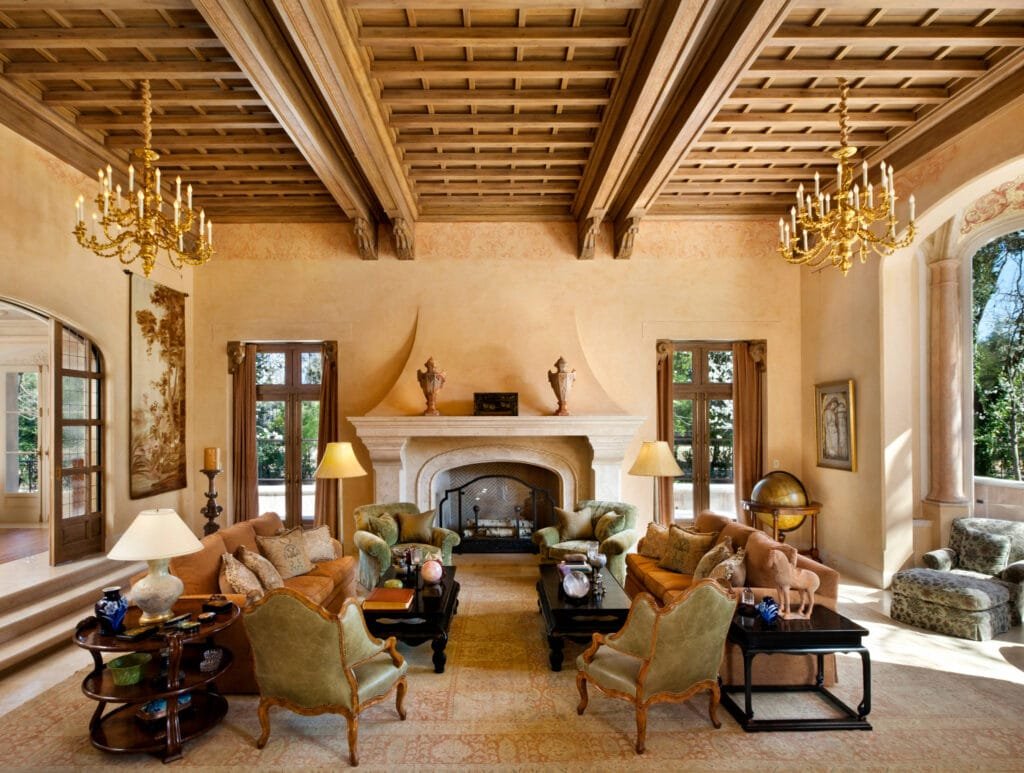
The palette centres on warm stone: crema marfil, travertine, Calacatta marble, and warm plaster in the background with accents in aged bronze, soft gold, and terracotta.
Furniture is formal in proportion: generously scaled, with carved timber frames, velvet or brocade upholstery, and symmetrical arrangements.
Architectural detail carries the style: coffered ceilings, arched openings, ornamental plasterwork cornicing, marble-framed fireplace surrounds, and full-height panelled doorways.
Why it connects to the Dubai market: Contemporary Dubai villas, often 5,000 sq ft and above, have the scale that the Italian villa style requires to read correctly.
The material expectations in UAE luxury residential projects (imported marble, bespoke joinery, and hand-finished plaster surfaces) are the same material requirements the style was built around. They are not additions to the style. They are the style.
The contemporary interpretation: very few clients want a full-period re-creation. The most successful current applications take the formal proportions, material quality, and architectural detail as the foundation, then pair them with simplified furniture profiles and a restrained decorative layer.
The result reads as modern luxury with historical grounding rather than a period pastiche.
9. Contemporary Interior Design Style
Contemporary interior design style is the most misunderstood category in the list. It is consistently confused with modern design, but the distinction matters.
Modern design refers to a specific historical movement from roughly 1920 to 1970, defined by a strict ideology about function determining form. Contemporary simply means what is being done right now.
And what is being done right now in 2026 is significantly warmer, more textured, and more material-rich than the stark white interiors that defined contemporary design a decade ago.
What defines it in 2026:
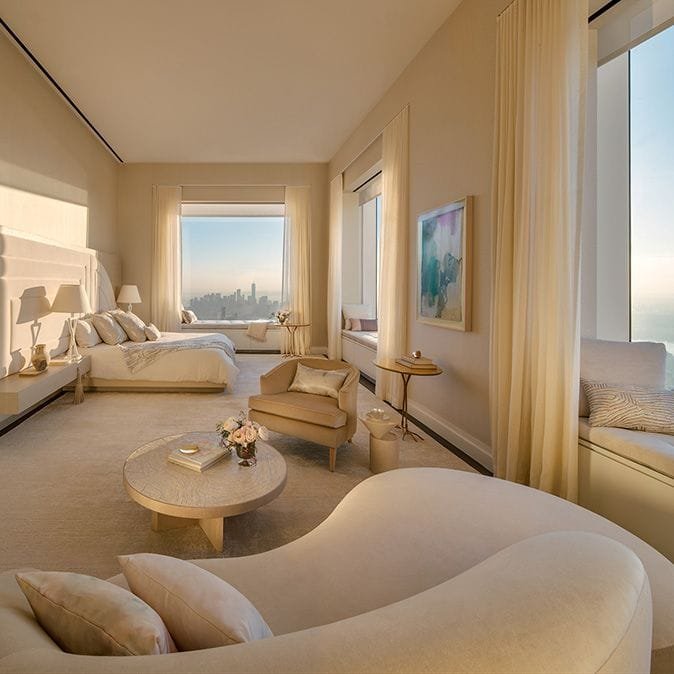
The current contemporary palette leans warm: warm greige, terracotta, muted sage, and warm white as the base, with carefully edited dark accents in charcoal or deep navy as contrast. Curves have replaced sharp corners in almost every furniture category. Natural materials — stone, timber, linen, bouclé, and rattan — dominate over synthetic alternatives. Fewer objects, higher quality, more intentional placement.
According to Architectural Digest’s 2025 design forecast, the shift toward what they describe as “quiet luxury” in contemporary interiors shows no sign of reversing. Similar trends have been noted by leading design studios in the UAE, including Euphoria Interiors, where homeowners are increasingly prioritising timeless materials, comfort, and understated sophistication over trend-driven aesthetics.
Their analysis attributes it to audience fatigue with maximalist and visually loud spaces driven by social media, combined with a growing preference for spaces that feel calming to live in rather than impressive to photograph.
Where it performs well: Contemporary works across nearly every property type and scale. Its current warm iteration translates particularly well to open-plan layouts, where the material warmth prevents large spaces from feeling cold or corporate.
10. Classic and Classical-Style Interior Design
Classic style in interior design is the broadest and most enduring category in this guide. It draws on Western decorative arts from approximately the 17th through 19th centuries: the Georgian, Federal, Regency, and French Empire periods all sit within its range.
What defines it:
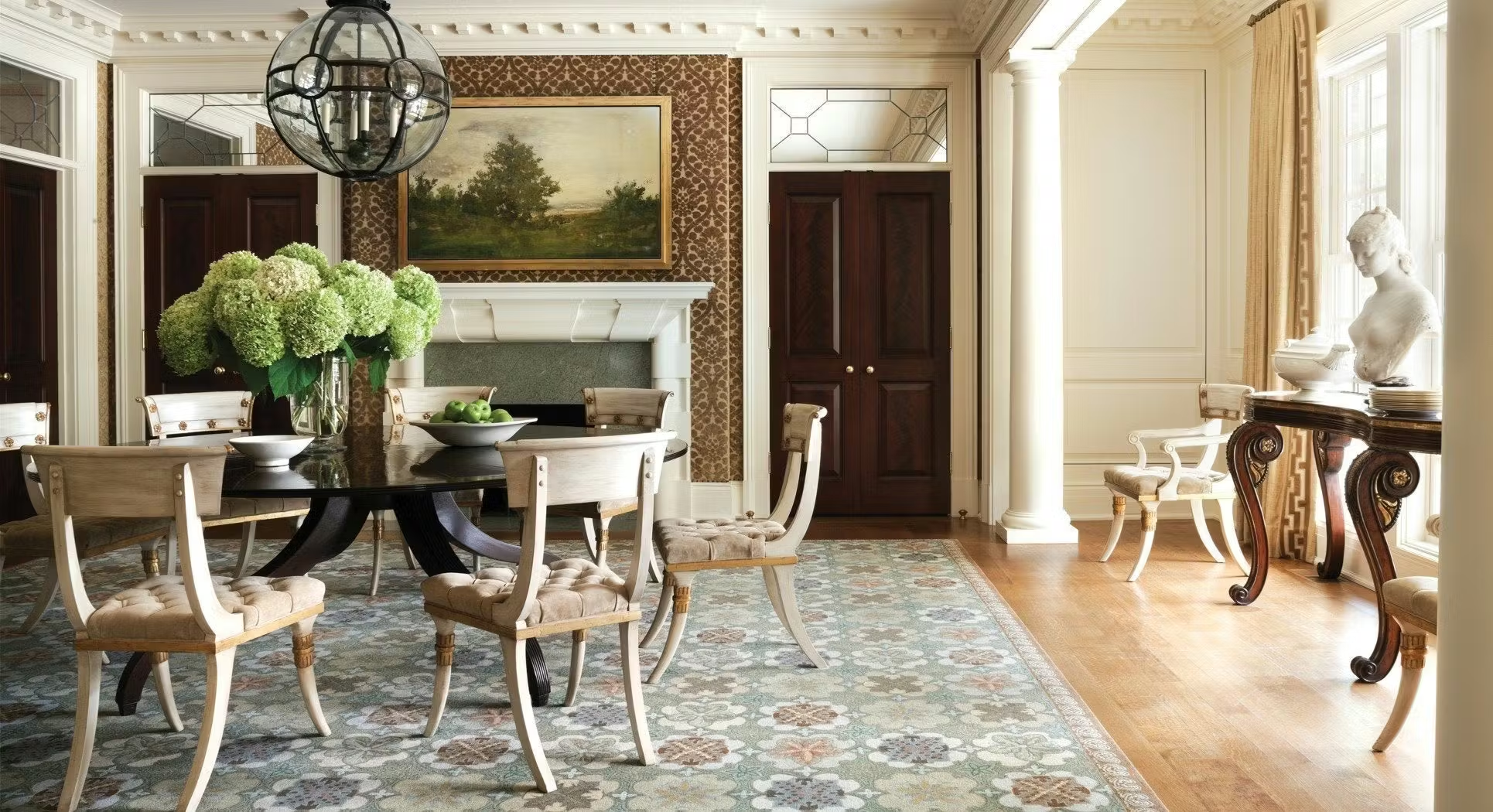
Symmetry governs the layout: pairs of chairs, matching table lamps, balanced architectural features, and centred fireplace walls. The palette runs warm and rich: deep burgundy, forest green, navy, and gold are accent colours against warm cream, ivory, and aged-white backgrounds.
Furniture has curved forms, turned legs, and carved detailing. Fabrics are formal: brocade, damask, silk, and velvet in traditional patterns.
Pattern plays a significant role: striped and trellis wallpapers, formal area rugs with border detailing, patterned upholstery, and curtains with traditional heading treatments and full lining.
Where it performs well: Period properties. Formal entertaining rooms and dining rooms. Clients who want permanence and craftsmanship rather than trend-dependent design.
Classic and classical-style interior design also photographs particularly well in natural light and holds its visual value as an investment better than most trend-driven alternatives.
11. Retro Interior Design Style
‘Interior design retro style’ refers broadly to intentional references to the visual culture of the 1950s through the 1970s – a period characterised by postwar optimism, synthetic material innovation, and a belief that domestic life should feel fun and forward-looking.
What defines it:
The palette swings between two poles. The 1950s end is pastel and bright: powder pink, mint green, canary yellow, and robin’s egg blue.
The 1960s–70s end is deeper and earthier: avocado, harvest gold, burnt sienna, and chocolate brown.
Furniture silhouettes are specific: tulip chairs, egg chairs, modular sofas on thin chrome legs, and sunburst clock designs are signature forms. Materials include moulded plastics, vinyl, chrome, and Formica in combination with teak and walnut.
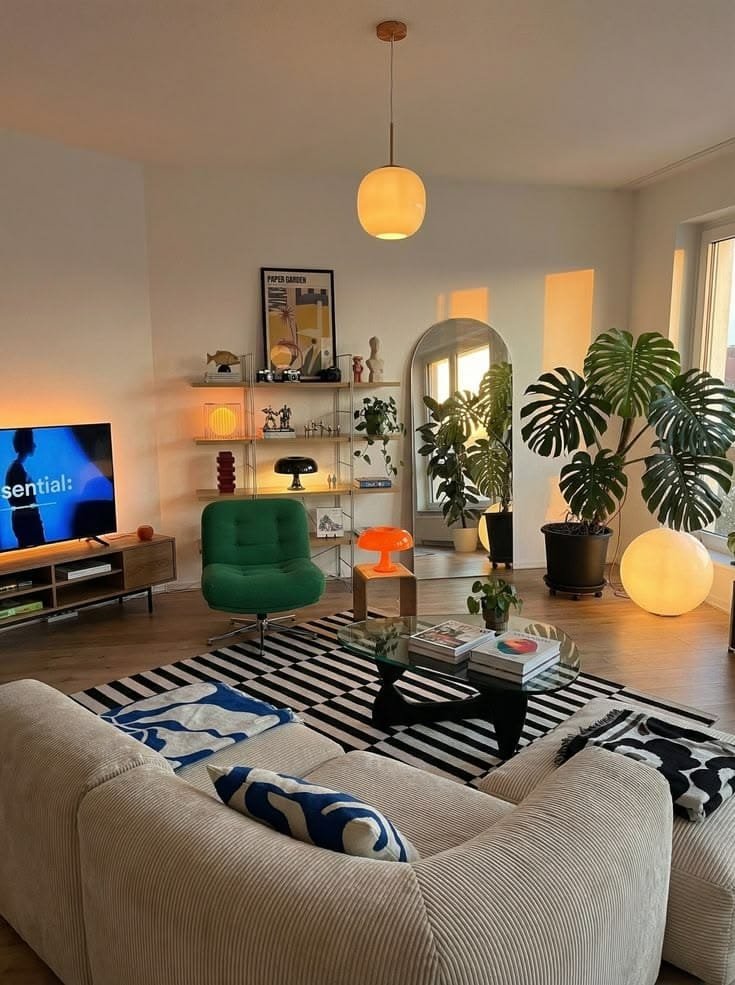
Where it performs well: The retro-style interior design approach works best as a committed concept rather than a scattering of vintage objects.
A kitchen or dining room designed around a specific decade’s references tends to be more successful than a whole-house application, which can become visually exhausting over time. It suits clients who want their space to feel playful and personal.
12. Gothic-Style Interior Design
Gothic style interior design is the most dramatic entry on this list and the most architecturally demanding.
It draws on the mediaeval Gothic tradition of 12th- through 15th-century European ecclesiastical and civic architecture, characterised by pointed arches, ribbed vaulting, dark stone, and an atmosphere of deliberate gravity.
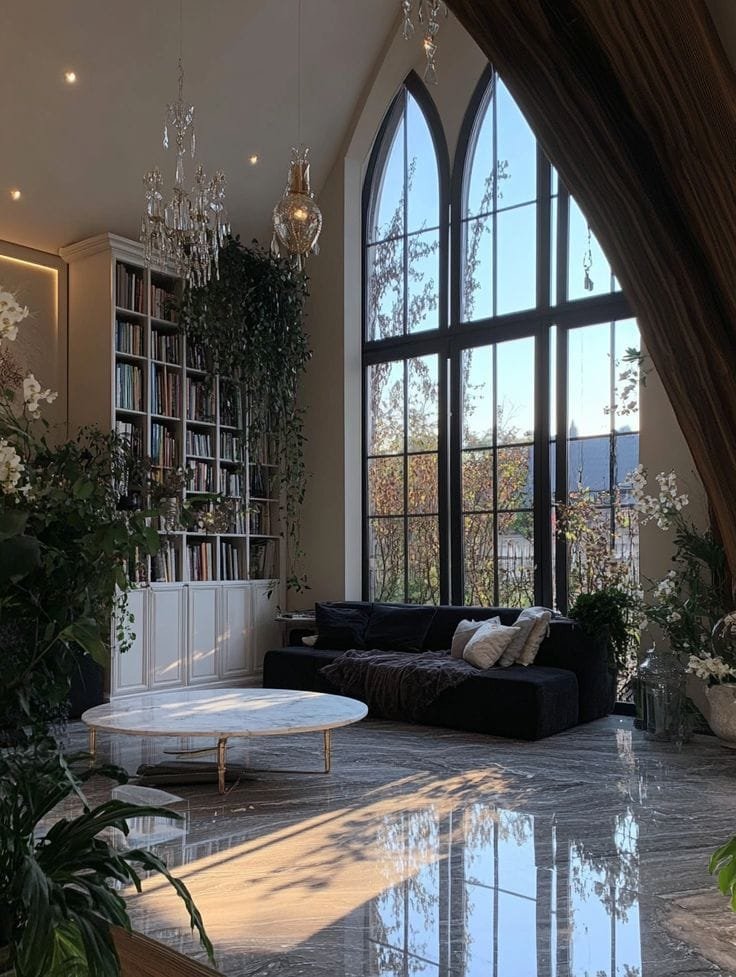
What defines it:
The palette is dark and rich: deep charcoal, black, burgundy, dark forest green, and deep plum against stone-grey or aged-white backgrounds.
Pointed arch detailing in doorways, windows, furniture backs, and decorative panels is the defining architectural signature. Materials include dark-stained timber, wrought iron, aged stone, velvet in deep tones, and stained glass where appropriate.
Lighting is atmospheric: candle-style chandeliers, wall sconces with exposed flame-effect fittings, and pools of warm light against dark backgrounds. The spatial atmosphere is intentionally theatrical.
Where it performs well: Library rooms, wine cellars, formal dining rooms, and private study spaces suit the gothic aesthetic most naturally.
As a whole-house style, it requires exceptional architectural commitment and a client who genuinely wants to live inside that atmosphere daily. In partial application, it can add significant character to spaces that would otherwise read as generic.
How to Mix Interior Design Styles Without Making a Mess
Pure style adherence is the starting point, not the destination. Most successful spaces in 2026 are informed by one primary style with considered influences from one secondary style.
The combinations that work most consistently:
Scandinavian + Japandi influence: Warm minimalism with a heavier material grounding in natural stone and darker timber. The restraint stays, and the temperature rises.
Mediterranean + Moroccan: Both styles share the warm palette, the handcrafted material preference, and the love of pattern. The difference is in the level of ornament — Mediterranean is more architectural, and Moroccan is more decorative.
Contemporary + Hamptons: Contemporary provides the furniture profiles and layout logic. Hamptons provides the architectural detailing and layered textile warmth.
Art Deco + Italian Villa: Both are formal, both are material-rich, and both operate at a similar scale. Art Deco brings the geometry; Italian villas bring the classical proportions.
The combinations that reliably do not work: any pairing where the palette logic is in direct conflict (Scandinavian pale tones against Moroccan jewel tones, for example) or where the scale expectations are incompatible (Gothic drama in a compact apartment or Bohemian density in a formal Italian villa salon).
Knowing which interior design styles exist is only useful if it leads somewhere. The practical next step is to pick one primary style; identify the three or four defining characteristics you will commit to across the whole space — palette, primary material, furniture form language, and architectural detail — and use those four decisions as a filter for every subsequent choice.
A space built around four consistent decisions will always outperform a space built around twenty individually beautiful choices that were never required to relate to each other.
If you plan to bring in professional help to make those four decisions, it is worth knowing what to ask before you pay for advice. Our guide to choosing an interior design consultant in Dubai explains how to compare fees, scope and relevant experience.
If you are planning a project and want to work through the style brief properly before any purchasing decisions are made, a strategic consultation is the right starting point.
Frequently Asked Questions
What is the difference between contemporary and modern interior design styles?
‘Modern design’ refers to a specific historical movement from roughly 1920 to 1970, defined by strict functionalist principles: flat surfaces, absence of ornament, and an ideology that form should follow function. ‘ ‘Contemporary design’ means what is current right now. In 2026, contemporary interiors are warmer, softer, and more materially layered than their 2015 equivalent. The two terms are often used interchangeably in casual conversation, but they describe genuinely different things.
Which interior design style works best for luxury homes in hot climates?
Mediterranean, Italian Villa, and Moroccan styles were all developed in warm-climate contexts, which gives them a natural functional advantage. Their material choices — stone flooring, thick plaster walls, shaded courtyard connections — address the specific conditions of heat, strong sunlight, and indoor-outdoor living that luxury homes in Dubai and similar markets face. Art Deco and Hamptons styles can also perform well at this scale, but they require more deliberate climate adaptation in the material specification.
Can you mix interior design styles in the same home?
Mixing works well when one style leads and one supports. The primary style should govern the spatial logic, the palette, and the architectural detailing. The secondary style can inform textile choices, accessory sourcing, or accent materials. What tends to fail is giving equal weight to two styles with conflicting visual languages in the same room.
How do I find my interior design style if I genuinely do not know?
Start with how you want the space to feel, not how you want it to look. Calm and ordered pulls towards Scandinavian, contemporary, and Hampton styles. Warm and layered pulls towards the Mediterranean, Bohemian, or Moroccan. Formal and prestigious pulls toward Art Deco, Italian villa, or classic. Once you have a feeling of direction, the visual choices become significantly easier to filter.
